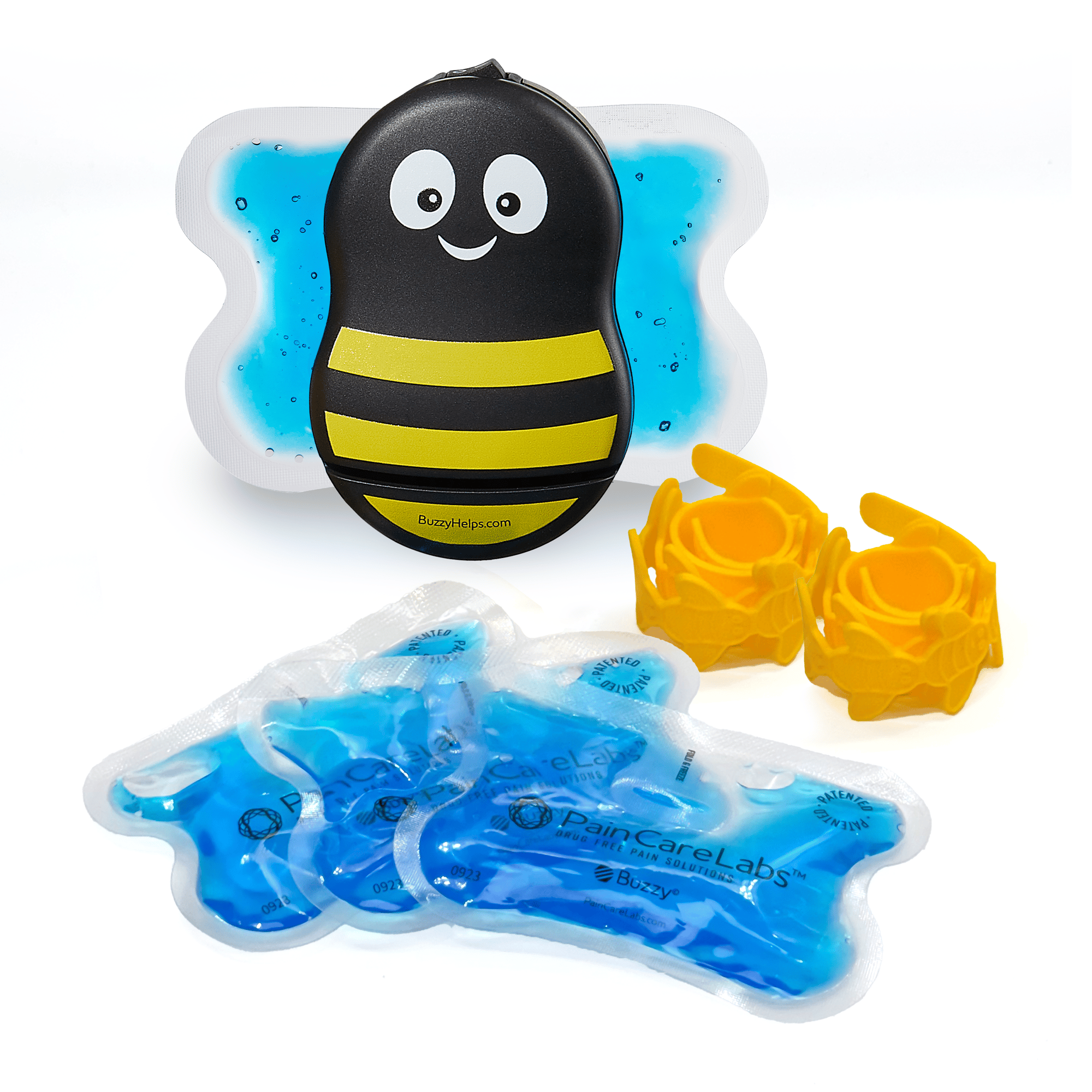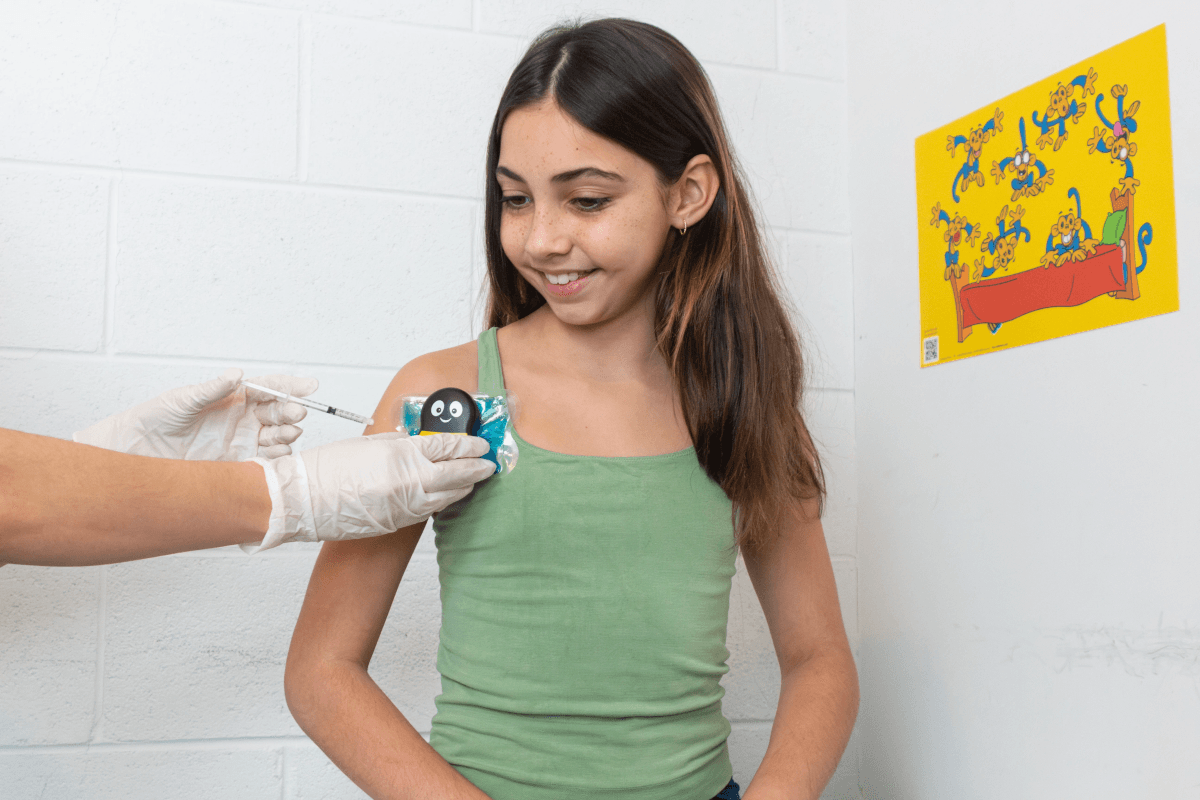
Freeze it, place it, reduce pain. Everything you need for Power Over Pain — for a flu shot, a blood draw, a dialysis session, or a shot at home.
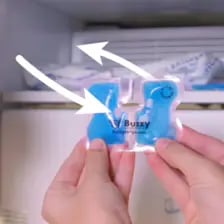
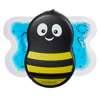
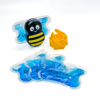
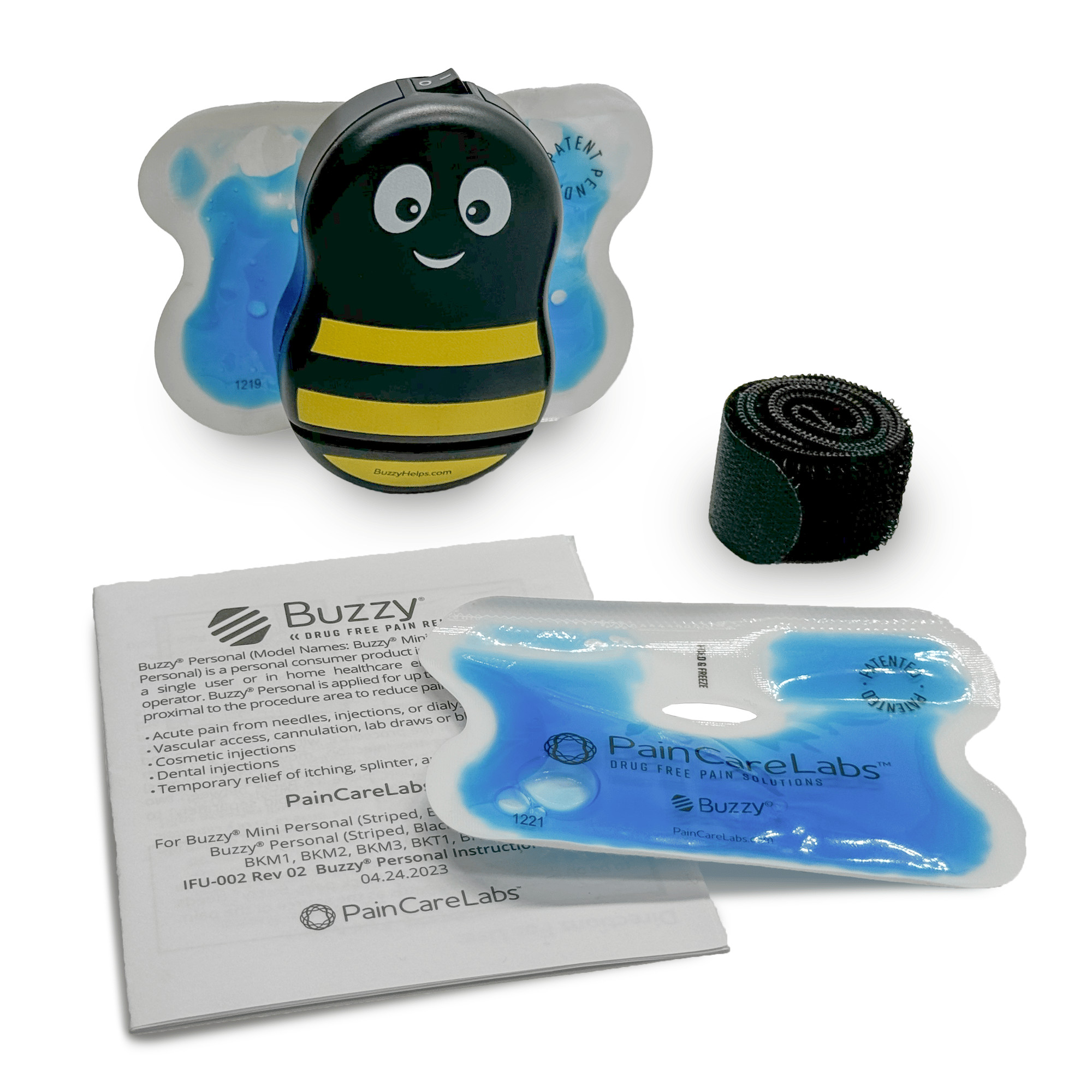
Soft wings absorb vibration instead of transferring it. Freeze solid for full effect. Stays cold ~10 min at room temp.
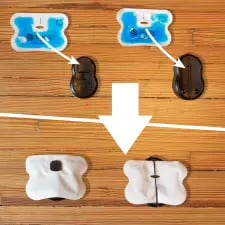
For the Personal & XL, slide the ice wings through the elastic strap. For the Mini, place the hole in the ice wings over the back hook.
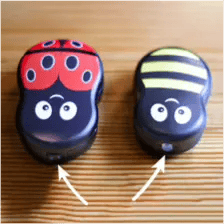
Secure with a strap, tourniquet, or your hand, then press the button. Mini auto-shuts off after 3 minutes.
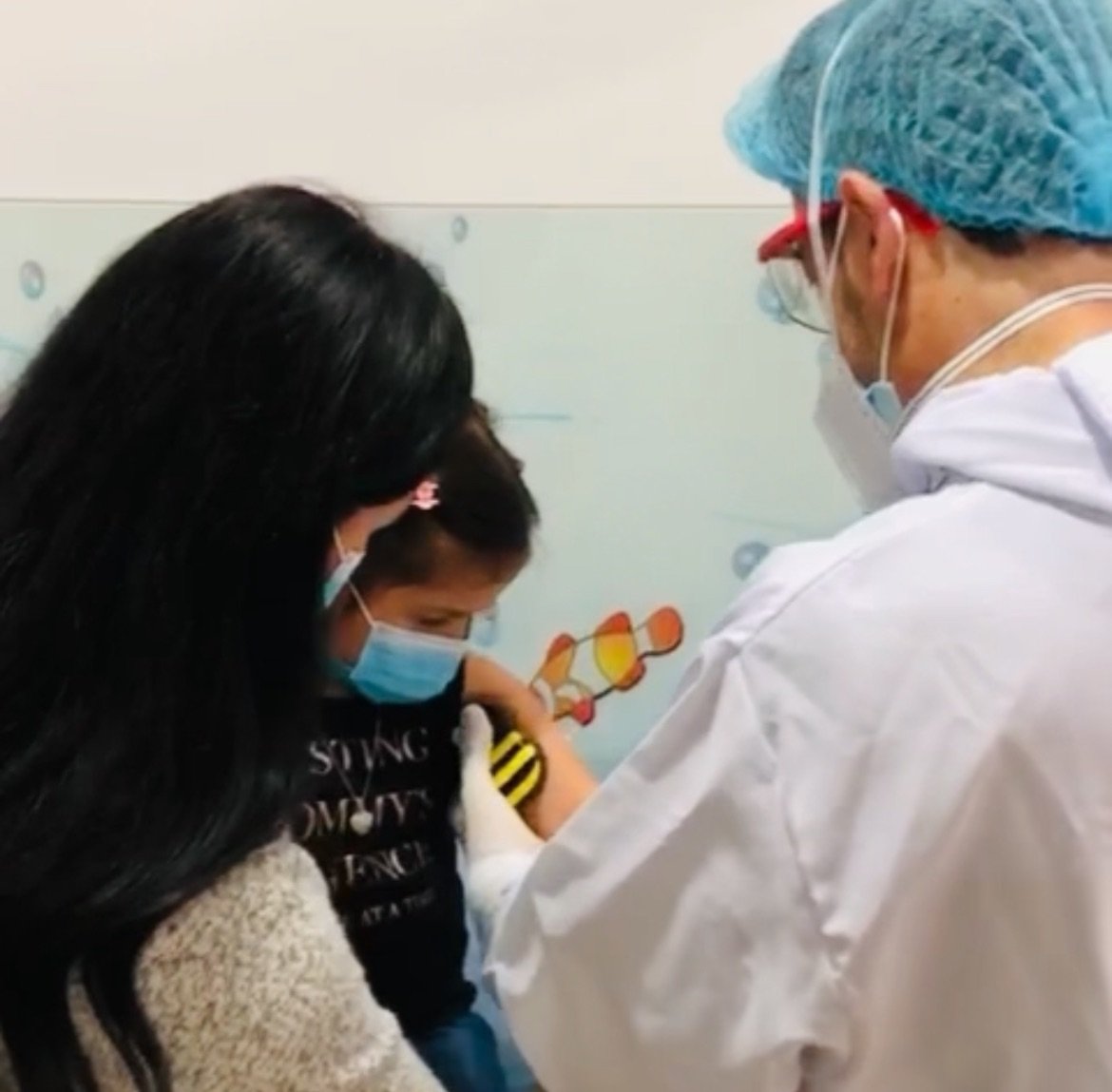
Hold firmly 10–30 seconds before the poke. Exact spot depends on the procedure — find yours below.
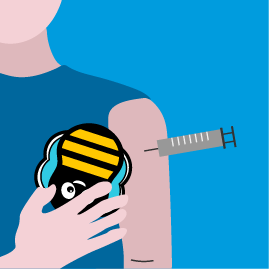
Buzzy works best placed "proximally" — between the needle site and the brain — along the nerve pathway (dermatome) carrying the pain signal.
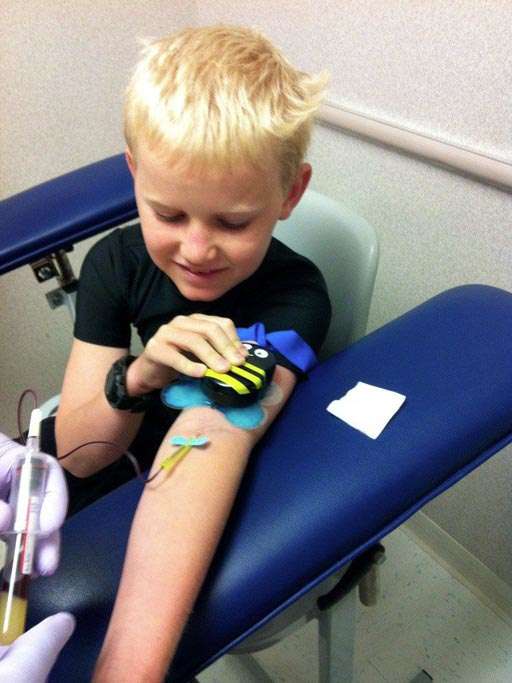
When treating an ache or injury, Buzzy should go directly where it hurts. For intramuscular vaccinations (typical for Flu shots and other vaccinations) Buzzy should be placed in the crook of the shoulder where the arm meets the chest. When doing subcutaneous injections, Buzzy should go directly on the intended needle site, then be moved proximally during the procedure. When using Buzzy for IV access or a blood draw or fingerstick, just place Buzzy proximally immediately prior to and during the procedure. For more details see below.

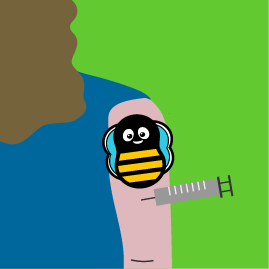
Place Buzzy in the crook of the shoulder where the arm meets the chest. The patient, a guardian, or clinician can hold the Buzzy in place. This allows the Buzzy to stimulate multiple different dermatomes at once.

To place “proximally” for IVs and during the actual painful procedure (splinter removal, cleaning a wound, injection, IV, etc.) means Buzzy needs to go “between the brain and the pain” to be effective. In other words, Buzzy should be placed along the path of the nerve to best interrupt the pain signals’ journey from your skin to the brain. The nerves travel in territories called “dermatomes”. If you’ve ever seen shingles, the very abrupt outlines of the rash come because shingles affects skin by irritating the nerves in one or more dermatomes. This picture shows Buzzy optimally placed to decrease pain in the C6 dermatome.

To place “proximally” for SC injections means Buzzy needs to go “between the brain and the pain” to be effective. In other words, Buzzy should be placed along the path of the nerve to best interrupt the pain signals’ journey from your skin to the brain. The nerves travel in territories called “dermatomes”. If you’ve ever seen shingles, the very abrupt outlines of the rash come because shingles affects skin by irritating the nerves in one or more dermatomes. This picture shows Buzzy optimally placed to decrease pain at the intersection of the C5 and T1 dermatomes.

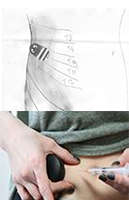
Dermatome pathways are fairly straightforward on the hands and arms, as they go straight down from the shoulder. Other places on the body, the regions get a little more complicated. This diagram shows positioning of Buzzy for a procedure on the line between T10 and T11. Imagine the nerves coming out from the spine and wrapping horizontally around the stomach and chest. This Buzzy is in great position for a poke between the bellybutton and Buzzy’s bottom. The skin on the stomach is thinner than the back or upper arm, so Buzzy® may only need to be in place 15-30 seconds before moving and doing the procedure.

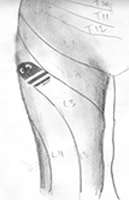
This shows where Buzzy would go for an injection on the mid-thigh, for example placement for a Rocephin, Humira, or Enbrel injection. First place Buzzy directly on the intended site to desensitize the area. Leave in place up to 60 seconds as it’s a more muscular area, then move toward the brain/spine a few centimeters up and lateral. Keep Buzzy® vibrating in place while the shot is given. Thighs are a bit tricky, because the dermatomes curve from backside toward the knee. Again, place on the area where the shot will go, but then slide a little toward the hip/spine rather than straight up and down. Buzzy’s motor is at his larger rounded tail end away from the switch, so the bigger rounded end should be closer to the shot, and Buzzy’s “head” should be closer to the actual head or spine. Leave the ice pack in place for this whole process if tolerated: ice is an important part of the pain relief.

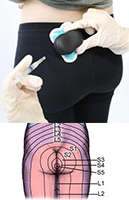
For gluteal injections, the nerve pathways are very tilted and fairly narrow. Buzzy XL may be better for this, as it is slightly larger and covers more area. For a gluteal injection in the upper outer quadrant of the buttock, after desensitizing the area 60-90 seconds, Buzzy will be angled and slightly closer to the spine.

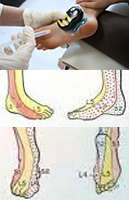
Placement of Buzzy for injections in the foot also may be more complicated. In general, imagine the foot divided lengthwise into three stripes, and place Buzzy closer to the leg in the same stripe.

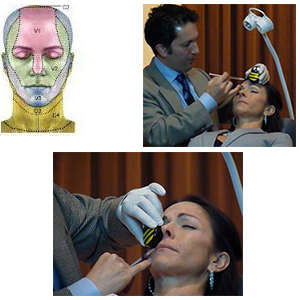
Facial dermatomes come straight from the back of the skull up and over, so Buzzy placement would be directly vertical for Botox or eyebrow procedures. For upper lip or mandible procedures, placement slightly above and lateral would be correct.
Home & family use, checkups, vaccinations
Reusable elastic strap system
Pediatric procedures, smaller extremities
Auto shut-off after 3 minutes
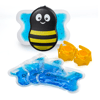
Adults, larger muscle groups
Bigger contact surface
Dialysis, blood draw, tourniquet use
Sized for AV fistula / draw sites
| Product | Best for | Key feature |
|---|---|---|
| Buzzy Personal |
Home & family use, checkups, vaccinations |
Reusable elastic strap system |
| Buzzy Healthcare XL | Adults, larger muscle groups | Bigger contact surface |
| Buzzy Healthcare Mini | Pediatric procedures, smaller extremities | Auto shut-off after 3 minutes |
|
Buzzy Pro |
Dialysis, blood draw, tourniquet use | Sized for AV fistula / draw sites |
*Placement and hold times above apply to all products. All products use and transmit the same vibration intensity & frequency.

Clean the vibration unit with alcohol-based sanitizing wipes.
Never autoclave or submerge in liquid.
Ice Wings are best stored in the freezer.
Soiled wings should be disposed of and replaced, not shared.

Buzzy® and healthcare wings are reusable across patients. Wings should be cleaned with alcohol-based cleaning wipes or by following your facility’s infection control protocol for non-critical equipment such as stethoscopes or patient monitors. Healthcare wings are the only wings that can be disinfected between patients. Soft-sided wings are single patient, and should be left with the patient for reuse or disposed of.
Wings and unit: alcohol-based or chlorhexidine wipes (packaged with a purple top container), or your facility's non-critical equipment protocol.
Healthcare wings are the only wings safe to disinfect between patients.
Ice Wings are best stored in the freezer.
Never autoclave or submerge in liquid.
⚠ Frequent use of certain Sani-cloths (hydroxides, dimethyl benzyl, ethyl ammonium chloride, ethylenediamines) can cause cracking after ~120 uses / two battery changes.
Replace the battery after roughly 100 uses, or sooner if Buzzy won't power on with wings attached.
Unscrew the battery compartment on the backside of the unit using a Phillips-head screwdriver.
Remove the existing dead batteries.
Replace the cover fully before use — a loose cover is the most common cause of intermittent power.
Dispose of used batteries per local battery-recycling guidelines, not household trash.
Wall-ready reference for care teams. Useable internationally across languages.
Dialysis & blood draw setup, at a glance. Useable internationally across languages.
Official personal product instructions and indications for use.
(BKT1, BKT2, BKT3)
Official healthcare product instructions and indications for use.
(BTH1, BTH2, BTH3, BTH4, BKHM1, BKHM2, BKHM3)
Official Pro product instructions and indications for use.
(BZP)
We've compiled many of our frequently asked questions into a searchable database. Our friendly chatbot, Buzz, can also answer questions from our FAQs.
Replacing worn wings, outfitting a clinic, or evaluating Buzzy for your health system — we'll point you to the right resource.